
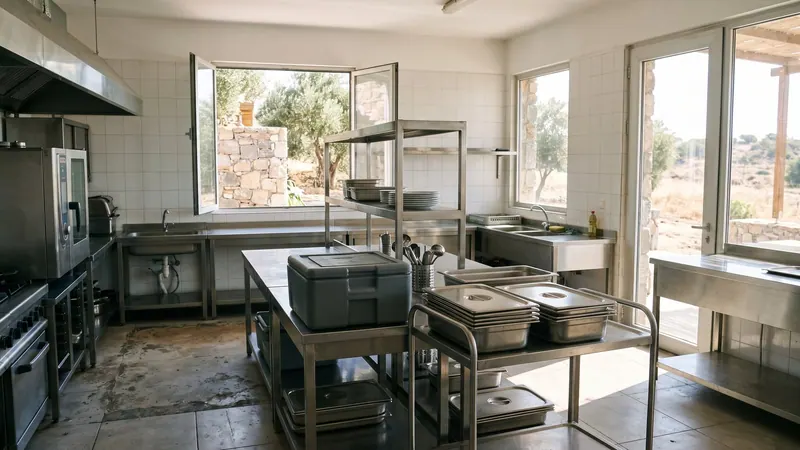
Catering means preparing hundreds of portions at once and delivering them somewhere else. The kitchen takes in more ingredients than a restaurant, washes more dishes and produces more waste. When one kitchen serves weddings, hotel events, boat lunches and staff meals, the workload rises and the cleaning rhythm can get squeezed.
In Bodrum, the number of events climbs in summer and so does the pressure on catering kitchens. At that pace, pests are usually first noticed in food preparation, in front of the cold room and in the dishwashing section. With the event calendar full when a problem appears, acting early gives a business an advantage.
Who turns up in bulk kitchens
- cockroaches, settling in hot, damp washing-up and preparation areas
- flies, bothering staff near waste, used oil and vegetable preparation
- mice, leaving signs in the dry store and under door gaps
- ants, moving around sweet products, jam and dessert preparation
- moths, which may appear on shelves of flour, pulses and dry goods
Checkpoints along the production line
A catering kitchen follows a sequence, and the pest risk changes along it:
- Goods-in: pests arriving from outside with boxes, crates and packaging
- Dry and cold stores: rodents, moths and damp-loving insects
- Preparation and cooking: cockroaches and flies
- Washing-up and waste: around drains and bins
- Packing and dispatch: door and ramp surroundings, transport crates
- Transport crates and trays: food residues left behind in dispatch
It is the whole chain that has to be seen, not a single link. For a smaller food business, restaurant pest control gives an idea; if you run counters and a terrace, cafe pest control does.
What the kitchen team can do
Pest control is worth more alongside kitchen discipline:
- wash floor drains and grids at the end of a shift
- keep dry food in closed, labelled containers
- put incoming boxes in a check area first, not straight onto store shelves
- empty bins at the end of the shift
- check the rubber seals on cold-room doors
These cannot promise prevention, but they make it harder for a problem to grow.
Event peaks and kitchen rhythm
Weddings at weekends, staff meals on weekdays and the odd boat event: a catering kitchen runs unevenly. That unevenness can disturb the cleaning programme and the stock cycle. A short walk around the kitchen the day after a busy weekend is one of the most practical ways to catch a pest problem early.
From the client’s side
The catering client rarely sees the kitchen, only the result. That is why checks often take place in places nobody notices: behind the dishwasher, beside the cold room, on the store shelf, inside transport crates. In jobs where presentation matters, such as weddings or hotel events, even a small pest problem in the kitchen can affect the business relationship.
Knowing the weak points of your own kitchen is useful for the daily routine and for protecting the company’s name.
A habit that works well for kitchen managers is a short weekly “pest walk”: the cold-room door, behind the dishwasher, the corners of the dry store and the waste area, with a note of what is seen. The note guides us at the inspection and makes it easier to find which section the problem began in. Even a single line written weeks earlier can be a valuable clue.
Our process
First we carry out a free inspection. Following the kitchen flow from goods-in to the washing-up area and from the dry store to the dispatch door, we establish the pest, its numbers and where it nests on site. We then choose the method for the area, using Ministry of Health approved products and a certified team. Afterwards we explain what to watch for and, if needed, make a follow-up visit and set up a seasonal or annual maintenance plan. You can call for a same-day appointment.
For the methods see pest extermination in Bodrum and insect control in Bodrum, and for other kinds of business, the services page.
Where we work
We look after catering kitchens in Bodrum town, Yalıkavak, Bitez, Turgutreis, Ortakent and the surrounding areas.
Appointments
To plan a free inspection for your kitchen, use the contact page or fill in the form. Our kitchen pest prevention routine is a handy checklist for staff.