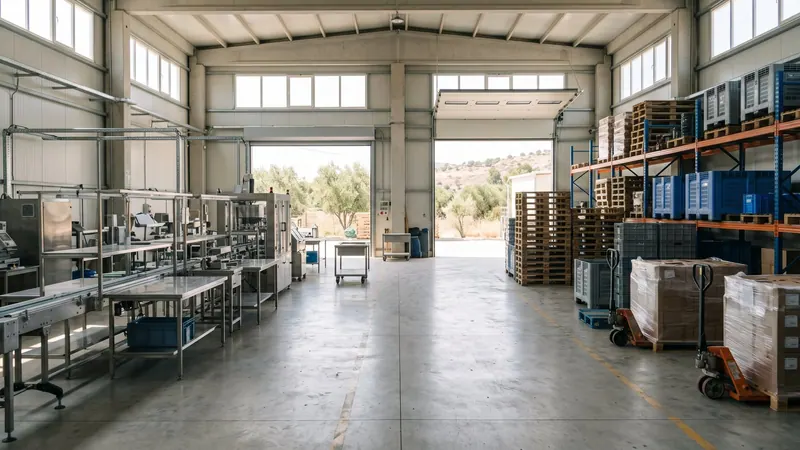
A factory is a chain: raw materials arrive, products are made, packed and dispatched. A pest can enter at any link and tends to settle in the corner that gets the least attention, whether that is a narrow forklift aisle, the space under a machine, a cable tray or the back of a pallet stack. With lorries coming and doors opening all day, you cannot close every entrance, so the realistic aim is to make it harder for pests to settle and multiply.
Small and medium production sites around Bodrum, with hot summers and farmland close by, often feel pressure from outside. For that reason we look at the surroundings of the plant as well as the inside.
Pests that show up on production sites
- rats and mice around raw-material stores, pallet stacks and the loading ramp
- cockroaches in the staff canteen, changing rooms and drain lines
- moths on shelves holding food or textile raw materials
- flies near open doors, the waste yard and dispatch
- ants that come through cracks around the building into canteens and offices
Mapping the site
The pest map of a factory normally includes:
- the loading ramp, gaps under doors and the loading bay
- raw-material and finished-goods stores
- the underside of production lines, behind machines and cable trays
- the canteen, kitchen and staff social areas
- the waste and recycling area
- gardens, scrub and drainage lines around the site
For shelving and pallet layout, see warehouse pest control; for livestock-related premises, farm pest control is the closer fit.
Closing the gaps and keeping order
Pest control in a plant depends on the state of the building as much as on treatment. Things managers can do themselves:
- keep door brushes, ventilation grilles and wall penetrations in good repair
- leave pallets clear of the wall so the back can be inspected
- clear spilled raw material at the end of every shift
- stop canteen leftovers travelling into production areas
- keep the outside waste area away from building entrances
None of these is a cure by itself; they support the treatment. Because machinery, layout and stored materials differ from plant to plant, one recipe cannot fit every site, and the plan is written for yours. In busy seasons temporary staff and extra deliveries mean doors open more often, so a check before that period shows weak points before shifts get crowded.
From a small workshop to a large plant
The basic question never changes: which door did the pest come in through and why did it stay? In a small food workshop the answer is often a single gap at a door; in a multi-section plant it may be a mix of dispatch, raw materials and waste. The first step is always to look on site.
Why records matter
Noting where and how often pests are seen guides the treatment and shows what changes over time. A new rodent sign may point to an opening under a door, and a new fly cluster to waste handling that has slipped. We keep treatments on record, and if site staff add their own observations to the same log the picture becomes clearer. Input from the production manager, the maintenance technician and the cleaning lead together gives a more accurate movement map.
Our approach on a factory visit
We begin by walking the site. On the free inspection we identify the pest, its numbers and its nesting points from goods-in to the loading ramp, canteen and waste area. The treatment uses the method chosen from those findings, with Ministry of Health approved products, carried out by our certified team. We then tell site managers what to watch, and where needed set up a seasonal or annual maintenance plan with follow-up visits and records.
You can read about our methods in pest extermination in Bodrum and insect control in Bodrum.
Where we work
We serve production sites in Bodrum town, Yalıkavak, Bitez, Turgutreis, Ortakent and nearby areas.
Appointments
For a free inspection of your site, call or message us through the contact page. See the services page for other kinds of business, and our note on mice in winter for the cold months when rodents move indoors.