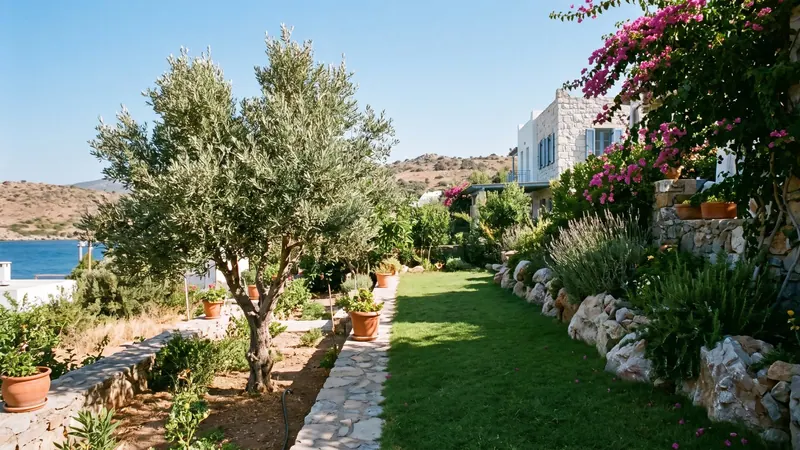
In Bodrum the garden is the second living room: dinner on the terrace, children on the lawn, guests around the pool. Watered grass, dense planting and heat are also the mix pests like best. A problem outdoors often moves inside, so treating the garden can be seen as the first line of defence for the house.
This page deals with the garden itself. For topics about a single pest, such as mosquitoes or snakes, please see the relevant pest pages; here the aim is to describe the garden as a whole.
Garden visitors
- ants, nesting along lawn edges, between paving stones and under plant pots
- mosquitoes and sandflies, which increase around irrigation and standing saucers
- wasps and bees, working flowering plants, fruit trees and the terrace table
- spiders, making webs in shrubs, wall corners and garden furniture
- flies, around the bin area and the barbecue
- snakes, wildlife that may be met among rocks, long grass and woodpiles
Reading the garden zone by zone
It works better to split a garden into parts than to treat it as one:
- Terrace and seating area: food scraps, the smell of sweet things and drinks
- Lawn and flower beds: ants, caterpillars and assorted insects drawn by damp and planting
- Pool surround: flies and mosquitoes, thanks to water and shade
- Wall bases and rockery: spiders, ants and scorpions
- Bin and compost corner: fly and rodent movement
- Shed and garden house: mice, moths and spiders
If the house is in the garden, use the villa and home pest control page for the interior plan, and for land with livestock buildings, farm pest control.
What the owner can do
A short routine reduces the invitation:
- empty water that collects in saucers and toys
- fix leaks in irrigation pipes and stop water pooling on the lawn
- pick up rotting fruit under the fruit trees
- keep wood and stone piles away from walls
- use bins with lids
These promise no particular result; they only make the place less attractive. In overgrown or rocky land, an expert eye may be needed to see where the problem comes from.
Four seasons in the garden
Spring brings flowers and new leaves, and with them ants and bees. Summer is the time of watering and heat, when mosquitoes, flies and spiders climb. With autumn rain comes damp, and rodents and spiders move towards buildings. Winter is when the garden is quiet and hidden corners can be looked over at leisure.
So rather than a single check, small seasonal reviews make more sense.
Design and pests
Plant choice, paving and the position of the pool all affect pest pressure. Thick shrubs against a wall give spiders and rodents somewhere to hide, and the line where lawn meets terrace can be an ant highway. Owners laying out a new garden should keep this in mind at the design stage.
In an existing garden you do not need to change everything: finding the problem corners and starting with them can be enough.
Gardens of Bodrum holiday homes stay untended all winter, so at the start of the season the grass is high, the pot saucers hold water and dry leaves have piled up. In such a garden, the first job is to look at the order of things rather than the pest: collect the leaves, cut the grass back and check the irrigation line. That makes the inspection easier and helps the following treatment give a clearer result.
How we start
We begin with a free inspection of your garden: walking the lawn, shrubs, irrigation line, pool edge and bin corner, we identify the pest and its nesting points on site. The method follows those findings. Our products are approved by the Ministry of Health and our team is certified. Afterwards we explain what you should watch for and, if needed, make a follow-up visit. Call us for a same-day appointment.
Method details are in pest extermination in Bodrum and insect control in Bodrum, with the other sectors on the services page. A look at wasp or bee: how to tell them apart helps before you call.
Where we work
We look after gardens in Bodrum town, Yalıkavak, Bitez, Turgutreis, Ortakent and the surrounding areas.
Book a visit
For a free inspection of your garden, contact us.