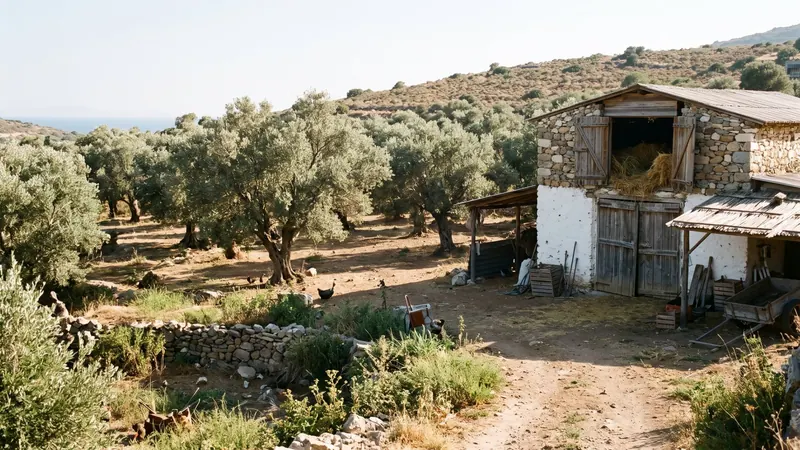
When animal housing, feed, water and manure sit side by side, the result is close to an ideal home for pests. Small farms, vineyard houses and stables around Bodrum tend to struggle with flies in summer because of the heat, while feed sacks and grain stores attract rodents.
A pest problem on a farm is more than a nuisance. It affects staff comfort, the impression visitors get and how produce is stored. Where a small business welcomes visitors, a cloud of flies or a trace of rodents is noticed at once. So with farm pest control we think about the source first and the method second.
Pests on the farm
- flies, often thickest around barns, manure and feed
- rats and mice in the feed store, hay bales and barn wall bases
- birds, which gather at open feeding areas and under barn eaves
- mosquitoes breeding at irrigation tanks, troughs and still water
- ants around feed and irrigation lines
- spiders in the corners of closed stores and barns
Looking at the farm area by area
Every part of a farm has its own profile:
- Barn and paddock: flies breeding on warm, damp floors
- Manure area: the classic place where flies multiply
- Feed and grain store: rodent, bird and insect activity
- Water sources: mosquitoes in irrigation tanks, pools and troughs
- Staff building and kitchen: cockroaches and ants
What matters is to treat the area where the animals are and the areas people use as two separate questions. If you have large grounds or landscaping, garden pest control is worth reading, and for buildings where feed and produce are stored, warehouse pest control.
What the farm owner can do
Non-chemical measures are as important as treatment:
- clear manure from the site at regular intervals
- keep feed in closed containers off the ground
- repair leaks from troughs and pipes
- stack straw and bales away from walls
- do not leave dead animals or feed waste lying around
These may not be enough by themselves. If the problem continues, an inspection is the quickest way to find the cause. Reviewing the farm in spring, before temperatures rise, gives a view of what summer will bring.
A calendar through the year
Spring: with warmth, flies begin to move around the barn, and manure and standing water should be looked at.
Summer: fly and mosquito numbers peak, and irrigation and troughs need frequent checks.
Autumn: as the weather cools, rodents head for shelters and feed stores.
Winter: rodents may stay active in closed stores and straw stacks, and because the area is checked less, the problem is noticed late.
This is only a general outline. The location of the farm, the kind of animals and the feed used all change the detail, and on Bodrum’s coast and in the foothills the damp and the wind differ, so two farms can face different pests in the same season.
Staff and visitor areas
The places people use matter as much as the animal areas: the staff room, a small kitchen, the farm shop and any guest area. Ants, cockroaches and flies come first there. Farms that sell milk, eggs or jam should think separately about the sales area.
What the first visit looks like
Our farm visit begins with a free inspection: we walk through the barn, manure area, feed store and the areas staff use, and identify the pest and its nesting points on site. We pick the method for that area, using Ministry of Health approved products and a certified team. After treatment we explain what to watch, and where needed we visit again and set up a seasonal or annual maintenance plan. Call us for a same-day appointment.
You can read about the methods in pest extermination in Bodrum and insect control in Bodrum, and see other sectors on the services page.
Where we work
We cover farms and shelters in Bodrum town, Yalıkavak, Bitez, Turgutreis, Ortakent and the surrounding areas.
Book an appointment
For a free inspection of your farm, please contact us. Our short guide to the difference between sandfly and mosquito bites is useful for anyone working outdoors in the evening.