
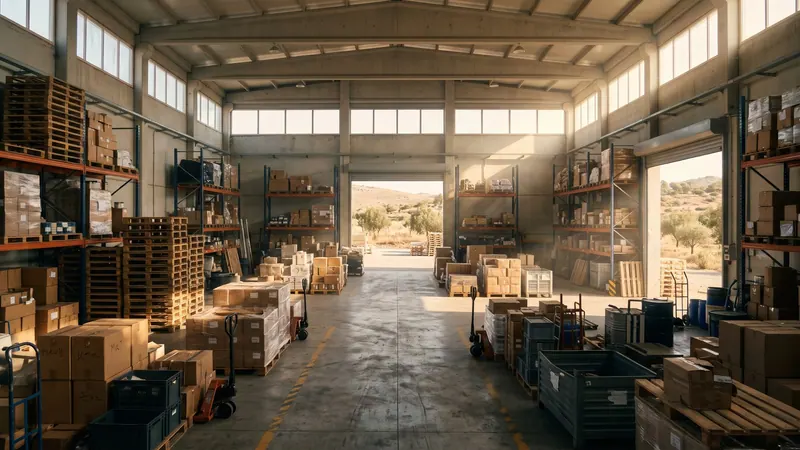
Seen from a pest’s point of view, a warehouse is an interesting place: lots of goods, thick packaging, little light and often little human traffic. That mix is a quiet home for rodents and for insects that feed on dry products. A gnawed corner of a box or a small moth above a shelf is often only the visible end of a bigger problem.
In Bodrum, supply stores for hotels, restaurants and shops, holiday-home storage and boat-equipment stores work hard in season and stand closed for long periods in winter. A problem that goes unnoticed while the doors are shut can land on you as a big job at opening time.
Who lives in warehouses
- rats and mice, leaving signs behind pallets, along wall bases and under door gaps
- moths, appearing on shelves of dry food, grain and packaged goods
- textile pests, a regular problem in fabric, carpet and clothing stores
- cockroaches, sheltering in damp corners, drains and cardboard heaps
- silverfish, seen in damp, dark archive and cardboard stores
- ants, drawn to sugary and oily goods
What gets checked first
In a warehouse, the first points we look at are:
- the loading door, ramp and gaps under doors
- the backs and undersides of pallet stacks
- the narrow passages between racks
- the corner for packaging and cardboard waste
- the edges where floor meets wall
- weeds, rubbish and drainage around the warehouse
Which product sits on which shelf also matters. When one warehouse holds both food and textiles, each may attract a different pest. For large premises tied to production, take a look at factory pest control, and for building-material stores, at construction site pest control.
Tidy storage and treatment work together
To lower pest pressure, warehouse managers can:
- leave pallets clear of the wall and off the floor
- put opened boxes and sacks into closed containers
- check old stock that never moves at regular intervals
- not keep cardboard waste inside the warehouse
- keep door gaps and wall penetrations in good repair
These do not replace treatment, but they support it.
Closed in winter, busy in summer
Seasonal warehouses have two periods of risk. Goods left at winter closing sit for months with no one looking, and pests can settle easily. At the start of summer, heavy deliveries mean doors open often and new packaging comes in. Walking the warehouse before opening and again during the busy spell shows the risk of both periods.
Different stores, different pests
A food store, a packaging store, a textile store, a holiday-home contents store and a boat-equipment store do not attract the same pest. In food stores it is rodents, moths and ants; in textile stores, insects fond of carpet and fabric; in packaging and cardboard stores, small damp-loving insects. That is why the stored goods are one of the first things we ask about at the inspection.
For product quality and customer satisfaction, finding a pest early is an advantage, because damaged goods are noticed before dispatch.
A useful habit for warehouse staff is a short check at goods-in and goods-out: the corners of new boxes, the seams of sacks and the underside of pallets. A pest may arrive with a delivery. If every sign is noted with the date and rack number, we can work out far more quickly which section has priority at the inspection.
How we begin
We start by walking your warehouse. On the free inspection we establish the pest, its numbers and where it nests, from the loading door and the racking to the backs of pallets and the waste corner. We choose the method from those findings, with Ministry of Health approved products and a certified team. After the work we explain what to watch for and, where needed, make a follow-up visit and set up a seasonal or annual maintenance plan. Call us for a same-day appointment.
The methods are described in pest extermination in Bodrum and insect control in Bodrum, and the other sectors are on the services page. Winter-season rodent tips are in our guide to mice in the house in winter.
Where we work
We look after warehouses in Bodrum town, Yalıkavak, Bitez, Turgutreis, Ortakent and the surrounding areas.
Appointments
For a free inspection of your warehouse, use the phone and WhatsApp details on our contact page.