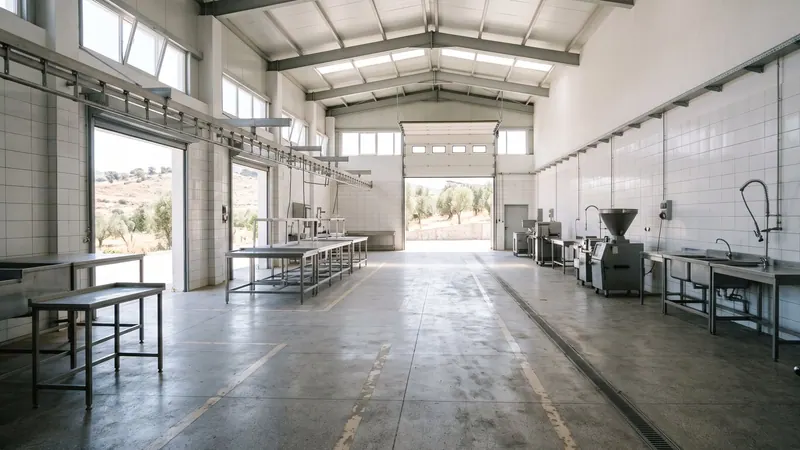
The biggest thing to control in a slaughterhouse or abattoir is the handling of organic waste and the swings in temperature. When meat, blood, hides, offal and feed residue come together, flies find an ideal setting. In a place like Bodrum, where summers are hot, this becomes clear, because high temperatures generally speed up fly breeding.
It would be wrong to treat pests in an abattoir as belonging to one section. The waste area, drainage, the front of the cold room, the staff social area and the animal holding area outside are all connected. This page does not go into regulation or inspection for such businesses; it explains only how pest control should be thought about.
Who is usually found
- flies, often concentrating around the waste area, drains and open doors
- rats and mice, who tend to leave signs along the drainage line, in the feed and waste sections
- birds, drawn to the open holding area and the waste surroundings
- cockroaches, settling in the staff kitchen and in warm, damp drains
- ants, moving around the workers’ eating area and cracks outside the building
A view by section
It is easier to understand pest pressure at an abattoir by splitting it up:
- Animal holding and feed area: flies, birds, rodents
- Slaughter and processing hall: flies and the area around drains
- Front of the cold room and dispatch door: pests entering at the door
- Waste and by-product area: heavy fly breeding
- Drainage and waste-water line: rodents and cockroaches
- Staff canteen and changing room: cockroaches and ants
Some of these sections are washed with running water all the time, so the timing and method of treatment have to be chosen with that in mind. For the land and barn side where livestock are kept, see farm pest control.
Orderly habits for the owner
Habits that support treatment include:
- collect waste in a closed container during the day and take it out
- wash the waste area and the container surroundings regularly
- keep drain grids open and clean
- not leave entrance doors open without need
- remove feed residue without delay
These may not give a sufficient result alone, but they make it harder for flies and rodents to hold on. If the problem continues you can ask for an inspection to find the source.
Extra care in hot months
When the temperature rises, the smell of waste and fly breeding both speed up. So in summer, the cleaning frequency of the waste area, the flow of drains and keeping doors shut should be watched more closely. In winter, rodents moving indoors for warmth become the issue. Each season has its own priority, so the plan stays flexible.
Order, cleanliness and treatment together
Where there is a lot of organic waste, as in an abattoir, treatment alone is not enough. The best results come with waste being removed quickly, floors washed regularly and entrances controlled. Treatment should be thought of as a support service added on top of that order.
Noting your own observations during the day helps us find our way quickly at the inspection.
The owner’s own observation is often the most useful clue: at what hour do flies gather most, along which wall base are rodent signs seen, in which section do the birds collect? Writing the answers down beforehand makes the inspection quick and on target. Changes of season should be on the list too, since the same business can face different pest pressure in summer and winter.
How we begin
For an abattoir we first carry out a free inspection. From the animal holding area to the waste section and from the drainage to the social areas, we establish the pest, its numbers and where it nests on site. The method is chosen for the area, with Ministry of Health approved products and a certified team. Afterwards we explain what to watch for and, if needed, make a follow-up visit and set up a seasonal or annual maintenance plan. You can call for a same-day appointment.
Methods are described in pest extermination in Bodrum and insect control in Bodrum; other sectors are on the services page.
Where we work
We serve businesses in Bodrum town, Yalıkavak, Bitez, Turgutreis, Ortakent and the surrounding areas.
Appointments
To plan a free inspection for your business, contact us by phone or WhatsApp. For wider reading on rodents, see mice in the house in winter.