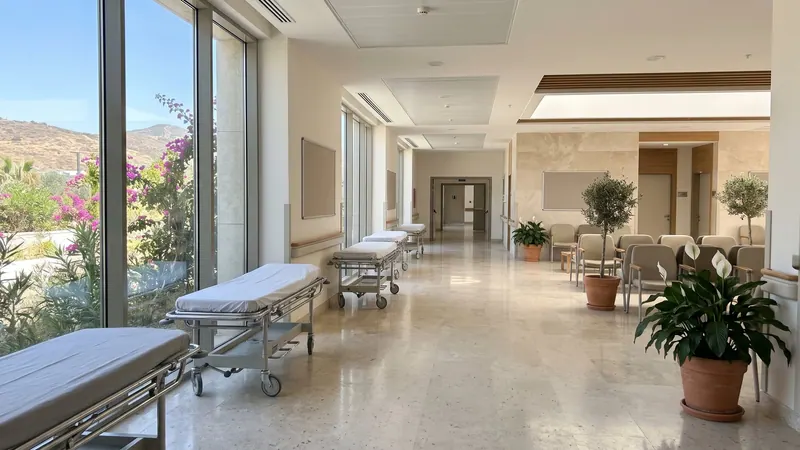
A hospital is a large, complicated building used by a great many people throughout the day. There is a kitchen and a canteen on one side, and waiting rooms, stores, a laundry, a cafeteria and technical rooms on the other. A building that works like a small city has plenty of corners where pests can settle unnoticed.
In such a place, a sighted insect or a rodent sign shakes the confidence of patients and visitors and disturbs staff routines. This page offers no medical assessment. It deals only with keeping a building free of pests and keeping its routine tidy. Bodrum’s population rises in the tourist season, which also increases activity around health facilities.
What turns up in healthcare buildings
- cockroaches, usually first in kitchens, canteens and drain lines
- ants, around the cafeteria, service areas outside patient rooms and the building surroundings
- flies, at waste collection points and open windows
- mice, in stores, the basement and the outside bin area
- spiders, in unused rooms and archive corners
- moths, on shelves holding stored textiles and dry supplies
Where to look, section by section
In a healthcare facility the trouble tends to appear in:
- the kitchen, canteen and cafeteria
- stores, archives and supply rooms
- the laundry and dirty-linen collection points
- the waste collection area and outside of the building
- staff rest rooms and changing areas
- the car park and the garden edges
Approaching all of these in the same way would be wrong; structure, use and how busy they are are weighed together at the inspection. For another public building used by many people, our school pest control page covers the subject from a different angle.
What management can prepare
To make the inspection easier, facility staff can:
- note where pests were seen, with the date and section
- say in advance which sections have restricted access
- state who is responsible for the kitchen and the waste area
- share records of earlier treatments, if there are any
This information helps set the process up correctly.
Season, crowds and population
Bodrum’s summer population is several times its winter one. In this period the kitchens and cafeterias of health facilities work harder, there is more rubbish and the building is used more. A review of the whole facility before the busy period saves the business time.
In smaller buildings such as clinics and polyclinics, the problem usually sits around the waiting area, a kitchen corner and the building surroundings.
A calm, orderly approach
What counts in a health facility is being able to work without upsetting the daily running of the building. So every detail is agreed with management: which section is done first, in what order and what to watch for.
“Hospital” covers a wide range, from a big state hospital to a private clinic, a dental polyclinic or a consulting room. Size and use differ in each, so one recipe cannot fit them all, and describing your facility shortens the inspection.
Another useful piece of information from management is the working pattern: which sections are busy at what hours, when the cleaning team works and when waste is collected. This helps us see at what times, and along which line, the pest is moving, and gives a more consistent basis for planning the work with management.
What we do on the first visit
The first step is a free inspection. We walk the kitchen, stores, waste area and building surroundings with management and establish the pest, its numbers and where it is nesting. The method we choose suits the area, our products are approved by the Ministry of Health and our team is certified. When we finish we tell management what to watch for and, if needed, make a check visit and set up a seasonal or annual maintenance plan. You can call for a same-day appointment.
For the general scope see pest extermination in Bodrum and insect control in Bodrum; other sectors are on the services page.
Where we work
We serve health facilities in Bodrum town, Yalıkavak, Bitez, Turgutreis, Ortakent and the surrounding areas.
Appointments
To plan a free inspection for your facility, fill in the form or use the phone and WhatsApp details on our contact page. Reporting a sighting accurately is easier with the cockroach species guide.