
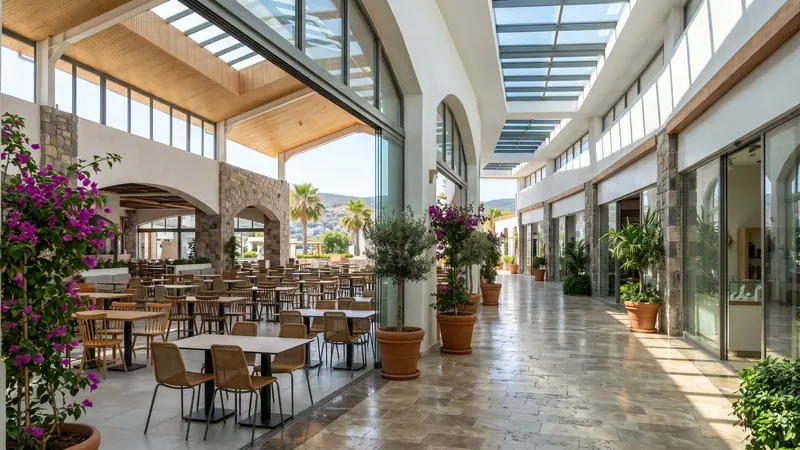
A shopping centre looks like one building, but it behaves like a small town with dozens of separate businesses inside. Food-court kitchens, a grocery, cafes, shop stockrooms, shared toilets and the waste room all share the same ventilation and service routes. A problem that starts at one point usually reaches another section along those shared lines.
In Bodrum the summer brings more visitors, more rubbish and more traffic through the doors. Pests tend to get in during these busy spells: a delivery box, a lorry or a service door left ajar is enough to start something small.
What turns up in malls
- rats and mice, who leave signs in service corridors, ceiling voids and the waste room
- cockroaches around food-court kitchens and drain lines
- flies at waste containers and eating areas
- ants in food-selling aisles and outdoor sections
- birds, which may try to nest in the eaves of open car parks and entrances
Common areas versus tenants
The hard part in a mall is that responsibility is split. Management looks after the communal parts and every tenant manages their own shop, so a pest report is often put off with the line “it is next door’s problem”. What works in practice is for the manager to treat the building as a single plan, including:
- goods lifts, storage corridors and service doors
- food-court kitchens and shared washing-up areas
- toilets, technical rooms and ceiling crossings
- open and covered car parks and the building surroundings
- the waste room and container area
For shop stockrooms, the details are in our warehouse pest control page, and for small outlets in the food court, in cafe pest control.
Notes for centre managers in high season
Coordination by management makes most of the difference. These are the points that usually help:
- set up one reporting channel for tenants so a sighting in a shop is logged straight away
- think about how long doors stay open during delivery hours
- check grease and waste routines among food-court operators
- wash the waste room and container surroundings often
- review cable crossings in ceilings and technical rooms from time to time
A customer who sees a pest tends to judge the whole building, not the single shop, so dealing with it at building level is the more consistent approach. Walking the site with someone from management helps establish which tenant uses which service line. In summer, staff areas and changing rooms used by seasonal workers should not be overlooked. In winter, stockrooms that stay shut and idle corners may need a fresh look even though visitor numbers fall.
The quiet hours
Cleaning crews, delivery vehicles and maintenance staff move around when the mall is closed, and that is often when pests are most active. Short observation notes shared between management and the cleaning and security teams give the inspection a good starting point.
Management, tenant, customer
Management sees the whole building, a tenant sees only their shop, and a customer remembers one pest in a toilet or at the food court. Building the plan around all three views stops the problem being passed from shop to shop.
How we begin
When mall management contacts us, we first carry out a free inspection. Walking the service corridors, food court, waste room and car park, we establish the pest, its numbers and where it is nesting. The method follows those findings, with Ministry of Health approved products and a certified team. Afterwards we explain what management should watch for and, if needed, return for a check. A same-day appointment is possible.
For the general methods, see pest extermination in Bodrum and insect control in Bodrum.
Areas we cover
We serve shopping centres and market-style buildings in Bodrum town, Yalıkavak, Bitez, Turgutreis, Ortakent and the surrounding districts.
Make an appointment
To plan an inspection for your centre, use the phone and WhatsApp details on our contact page. Other premises are on the services page, and the cockroach species guide helps tenants describe what they have seen.