
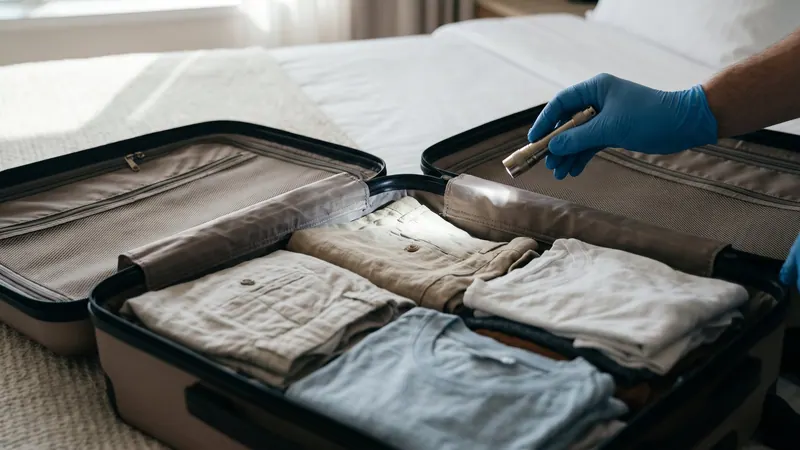
You are home from your holiday. The suitcase goes through the door, straight to the bedroom, gets opened and emptied into the laundry basket. It is the most natural routine in the world, and also the ideal route for bed bugs. They do not usually appear in a home out of nowhere. They come in with cases, bags, clothes or second-hand furniture. This guide puts the steps in order from the moment you arrive, without needless panic.
Why luggage?
The CDC’s bed bug page says bed bugs spread by getting into the seams and folds of luggage, overnight bags and folded clothes, and that most people do not realise they are transporting them. It lists bedding and furniture too. The University of California’s bed bug guide adds that hotels, furnished apartments and similar places are most at risk of infestation, and that people can bring the insects into their homes on luggage, clothes, bedding, furniture or other objects.
The idea is simple: a bed bug can ride in a seam without you noticing.
Arrival: rules that start at the door
The first hour is the most valuable.
- Do not take the case into the bedroom, onto the carpet or onto the sofa. Choose the hallway, a balcony, a garage or a hard-floored area.
- Open it somewhere well lit and, if you can, lay a plain light sheet on the floor so anything that falls out is easy to spot.
- Take clothes out and move them straight towards the washing, not into wardrobes or onto the bed.
- Empty the case completely and then inspect the empty case separately.
The University of California guide suggests frequent travellers keep luggage away from the bedroom, for example in a garage or hall cupboard.
Inside and outside the case
Use a torch, magnifying glass or phone camera on:
- zip teeth and the folds beside them,
- seams along the inner lining,
- wheel housings and handle fittings,
- pocket interiors and label areas,
- the edges of folded clothes and the stitching of bag straps.
Signs to look for are small, flat, oval, rust-coloured insects; dark, roughly round spots that are the insects’ droppings; light-brown shed skins; rusty blood spots, and small pale eggs. The University of California guide notes that you can confirm an infestation only by finding the insects or their signs, which include faecal spots, blood spots, egg cases and shed skins.
Even if you find nothing, wash
Seeing nothing does not mean nothing is there, because eggs and young insects are very small. So do the laundry step regardless. The guide advises washing all bedding and clothing in hot water (120°F, about 49°C) and drying on the hottest setting, with at least 10 to 15 minutes of exposure, and notes that a home drier at its hottest setting can deliver the necessary heat. It also says to consider whether heat will damage the fabric, so read the label before you start.
For items that cannot be washed, such as shoes, bags and leather accessories, inspect the seams and folds first. If you suspect something, keep it sealed in a plastic bag and look more closely.
If you have bites
Perhaps you noticed bites after you got back and thought of bed bugs. The University of California guide says that distinguishing bed bug bites from those of mosquitoes, fleas and spiders is difficult to impossible, and that the only way to really confirm them as the cause is to find the bugs or their signs in your bed or bedroom. The CDC adds that marks may take up to 14 days to develop in some people, and that bed bugs are not known to spread diseases. Other biters are possible, and our article on sandfly and mosquito bites can help you weigh up the alternatives. If a bite becomes severe or you have an allergic reaction, contact a health professional.
Not every bag is the same
Luggage checks cover everything you carried. Hard-shell cases look seamless but have hidden gaps in wheel housings and under handles. Fabric backpacks and sports bags offer more pockets and zips to hide in. Children’s toys, blankets and pillows go straight to the bedroom, so check soft toys and then wash them or keep them in a sealed bag.
If you travel for work, the laptop bag and briefcase are easy to forget. After camping or boat trips, sleeping bags, mats and damp towels deserve the same care. A second-hand bed, sofa or mirror frame is high risk. The University of California guide says second-hand mattresses and furniture are known to be high-risk sources of bed bug infestations and advises thoroughly inspecting any such item before bringing it into your home.
What not to do
- Mix dirty and clean laundry in the same basket.
- Throw away half your belongings at the first suspicious insect.
- Put suspect items out without sealing them in a bag. The guide warns against leaving infested items on the curb or porch.
- Treat a bite as a diagnosis and ignore other causes.
- Alarm neighbours without evidence. If you do find clear signs in a flat, though, the building manager should know.
A short checklist
A list on your phone helps when you are tired after a journey.
| Step | Note |
|---|---|
| Case opened in the hallway | Never reached the bedroom |
| Zips, seams and wheel housings checked | Torch used |
| Clothes straight to the wash | Hot wash and hot dry where the label allows |
| Empty case stored away from bedrooms | Garage or hall cupboard |
| Bed corners checked for a week | Dated note |
Second-hand and borrowed items
Anything coming into the house from outside should get the same attention: a second-hand mattress or sofa, a framed mirror, a blanket from a friend, a cot, cushions brought from a rented flat for the season. Look over the surface, seams and back with a torch and, if possible, leave the item in a garage or on a balcony first. Ask the same question every time: is there a dark spot, a shed skin or a rust-coloured stain in a seam or fold? Deciding not to carry a doubtful item into your bedroom costs far less than going through a bed afterwards.
How long should I keep watching?
One check does not close the case. On day one you inspect the case and clothes. During the first week you look at the bed and its surroundings. Over the following month you watch for new stains on the sheets or fresh bites in the morning. During this time keep the bed a little away from the wall and make sure the sheets do not touch the floor, so that a problem is easy to spot early. If nothing shows up, you can go back to normal.
The first week at home
Eggs hatch over time, so a bug you could not see on the first day may show up later. In the first week:
- Look at the four corners of the mattress, the base seams and the area behind the headboard with a torch.
- Check the sheets for new dark marks.
- Keep the bed out from the wall and the sheets off the floor.
- Keep the emptied case away from the bedroom until you are sure.
Away from home
Part of the check can happen while you travel. On arrival in a room, keep the case on a hard surface such as the bathroom floor. A look at the headboard and the sheet folds with a torch takes a few minutes. The University of California guide advises inspecting luggage before leaving, and changing rooms or hotels if you suspect bed bugs. If you run a guesthouse yourself, our guesthouse pest control checklist turns the same ideas into a routine for your rooms.
Combining with reopening a holiday home
If you are travelling to a holiday home, the case and the house both need a check. Read our guide to opening a holiday villa alongside this one.
If you remain unsure
Regular stains, live insects or repeated bites with no obvious cause call for a closer look. Our page on bed bug treatment describes how we approach it, and your dated notes can go with a message through the contact page when you ask about a free inspection.