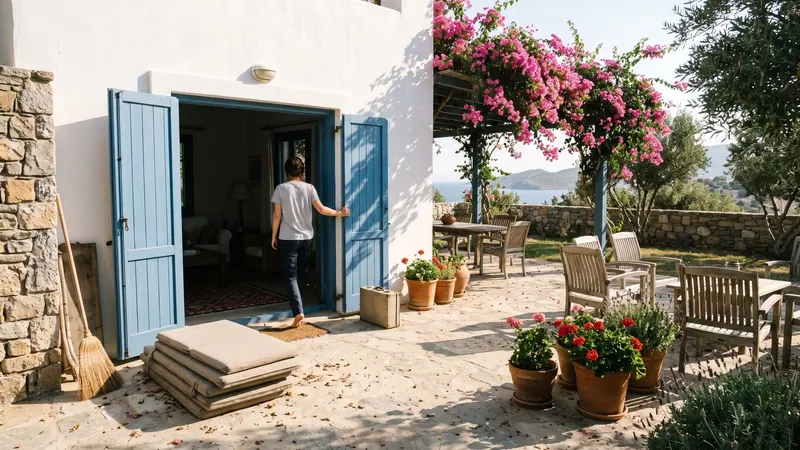
You turn the key, push the door and the stale air of a house that has been shut for months meets you in the hallway. The natural reaction is to throw the windows open and start scrubbing. Resist it for an hour. Cleaning erases traces, and traces are exactly what tell you whether something moved in while you were away. This guide organises the reopening of a Bodrum villa into three windows of time: the first hour, the first night and the first week.
The first five minutes: use your senses
Before touching anything, stand in the hall and ask four questions.
What can you smell? Mustiness and damp are normal after a long closure. A sharp, ammonia-like odour can suggest rodent urine, and a heavy, sweetish smell can point to a dead animal somewhere in a wall or roof void. Note where the smell is strongest.
What can you hear? A silent house makes small noises obvious: scratching inside a wall, scuttling above the ceiling, a buzz at a window. Evening is when such sounds carry best.
What can you see? Dead flies and wasps along window sills, small dark specks on floors, lines of ants at the foot of a wall, fresh webs in ceiling corners.
What does the air feel like? Damp air and clammy surfaces mean moisture, which brings its own set of pests.
Take photos on your phone as you go and start a dated note. These first impressions are your baseline.
The first hour: a torch tour
Open windows and doors to air the house, then work through the rooms in a fixed order with a torch.
- Doors and windows. Check door thresholds, window sills and the corners of insect screens for dead insects, gnawing and gaps.
- Kitchen. Open cupboards and drawers, look behind the fridge if you can move it, and inspect any dry food left behind. Webbing, tiny holes in packaging or droppings all matter.
- Bathrooms and under sinks. Look for leaks, damp stains and drains that have dried out.
- Store rooms. Cardboard boxes, stacked paper and old bedding are favourite hiding places.
- Terrace and balcony. Look for nesting material, droppings and feathers.
The CDC’s rodent control page explains what to look for. Rodent droppings are pointed at one end and often contain hair, and they turn up in cupboards, drawers and other places out of sight. If droppings keep appearing after you clean an area, that points to rodents being active there, whereas gnaw marks on their own may only show past activity. The same page notes that safe clean-up of rodent waste and nesting material matters for preventing illness and links to a separate guide, so read it before you start. This is why you document first, clean second, and look again afterwards.
The first night: what only appears after dark
Many household pests are nocturnal, so the first evening is revealing. Before bed, switch the kitchen and bathroom lights on suddenly and watch. Cockroaches and silverfish scatter in the light, and a handful of them in one room is useful information. In the bedroom, pull the bed a little away from the wall and check the corners of the mattress and the frame with the torch.
Listen as you lie in bed. Running overhead, scraping in a wall or buzzing at the glass tells you where to look tomorrow. If you hear rodents in winter and early spring, our article on mice in the house in winter explains what the sounds, droppings and marks usually mean.
The first week: watch and tidy
The days after reopening decide how the season goes. A simple routine is enough.
- Each morning, glance at the kitchen and bathroom floors for crumbs, droppings or insects that were not there yesterday.
- Move food into lidded containers straight away and never leave open packets out.
- Keep the bin lidded and empty it every evening.
- Wash or air bedding and curtains that have been stored.
- Look around the garden and balcony for standing water, piles of leaves and plant saucers holding water.
By the end of the week you should be able to say the house is quiet. If something does show up, your notes from day one make it far easier to trace.
Suitcases and arrivals
Luggage that arrives with you is part of the reopening. Before bags go into the bedroom, read how to inspect them in our guide to bed bugs and luggage after travel. Doing this on the first day is much easier than dealing with an infestation in August.
Wardrobes, rugs and textiles
Blankets, curtains, rugs and wardrobes are quiet refuges in a shut-up house. Open each wardrobe and look into the inner corners. Fine holes in fabric, silky webbing or cast skins suggest textile pests. Lift the edge of rugs and check the folds of curtains. Even if you find nothing, airing seasonal clothes before putting them away is a sensible habit. If damage turns up, our page on moth control explains what you may be dealing with.
Water systems and appliances
A house left empty has stagnant plumbing. When you reopen, run the taps and shower for a while so that drain traps refill with water, because dry traps let smells and small insects travel up from the pipes. Pour water into rarely used showers and toilets as well. Spot a leak and call a plumber quickly, since damp invites mould and insects.
Appliances matter too. The space around a fridge or washing machine is warm, dark and full of crumbs. If you emptied the fridge and propped the door open when you left, wash it out when you return to keep odours and mould at bay.
The garden and the outside of the house
The outside is often forgotten at reopening. Walk around the walls and look at stacked wood or rubble against the building, leaks from the pool or irrigation, dry leaf piles and the edges of the roof. Cracks and holes in an outer wall show how pests have been getting in. Trimming tall grass and removing unused items takes away places to shelter.
Findings and first steps
| What you see | What it may mean | First step |
|---|---|---|
| Many dead flies on the window sill | Flies bred indoors while the house was closed | Air the room, look for the source |
| Webbing and small moths in a cupboard | Pantry moths | Check packets one by one |
| Thin black droppings on the floor | Rodents or insects | Photograph, note size and place |
| A line of ants along a wall | Entry point and nest nearby | Follow the trail outside |
| Drain smell | Dry trap or build-up | Run water, check again |
A short sequence for opening day
- Open up, air the house, and spend the first five minutes only looking.
- Photograph and date anything unusual.
- Tour the kitchen, bathrooms, bedrooms and balcony with a torch.
- Only then start cleaning.
- Put food in lidded containers and set up bin routines.
- Repeat a short check on the first night and during the first week.
Keeping notes that help
For every finding write down four things: where it was, what it was, when you saw it and what you did. One note on your phone with a line per room is enough. At the end of the week, count the lines by room. A number that falls shows your routine is working. A number that rises suggests the source lies elsewhere. If you want to compare with how you left the house, our holiday home closing checklist is the natural companion to this one.
When to ask for help
When the same signs return after cleaning, or several rooms are affected, it makes sense to have the property looked at. Our page on villa and home pest control explains how we approach holiday homes, and you can ask about a free inspection through our contact page. Your day-one photos and notes will make that conversation far more useful.