The word “moth” hides two quite separate household pests. One quietly chews holes in jumpers and rugs; the other riddles flour, rice and dried fruit with silk. They look alike in the half light, and people often confuse them. Fortunately, the evidence you can gather in a minute, mainly what has been damaged and how the insect flies, is enough to tell them apart.
First clue: what has been damaged
Look at the victim before you look at the insect.
- Wool jumpers, rugs, fur, feather pillows, silk and velvet: clothes moth larvae.
- Flour, semolina, bulgur, pasta, rice, nuts, dried fruit, pet food: pantry moth larvae.
Remember that it is the larvae that do the harm. The flying adults only mate and lay eggs. Swatting every moth you see will not end the damage while larvae continue to feed elsewhere.
The clothes moth
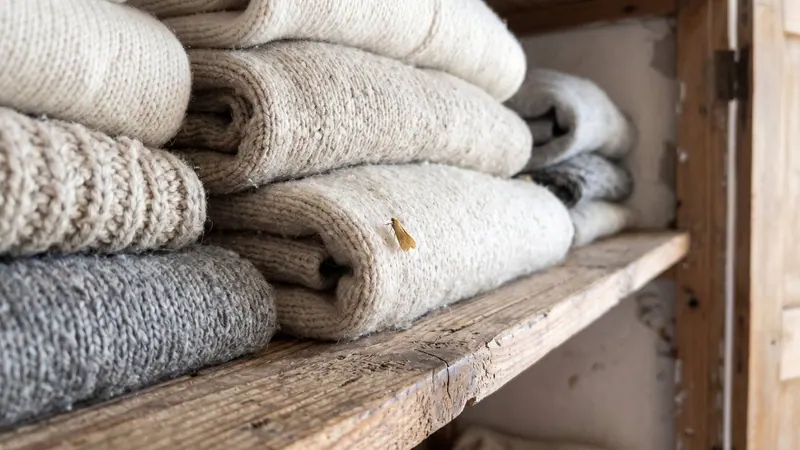
The University of California’s clothes moth guide notes that these moths are only about 1/4 inch (roughly 6 mm) long at rest and that the webbing clothes moth is gold with reddish-golden hairs on the head. Their flight is weak and erratic: they flutter around rather than flying in a steady line, and they usually stay close to the infestation. Their larvae are shiny white with dark heads. Casemaking larvae carry a silken case around, while webbing clothes moth larvae spin feeding tubes and silken patches.
Wool is the main target. Synthetics or cotton blends are generally attacked only if they contain wool. The damage sits in hidden places: under collars and cuffs, in upholstery crevices and beneath carpet under heavy furniture. Signs include silken tubes in folds, mats of silk, surface grazing and holes.
For prevention the guide recommends cleaning rarely disturbed places regularly, vacuuming under heavy furniture and in cupboards, and emptying the vacuum bag promptly. It also suggests storing clean items in an airtight container and keeping indoor humidity low. Laundering at a temperature of at least 120°F (about 49°C) for 20 to 30 minutes kills every stage, and brushing and sunning woollens also helps.
The pantry moth
Food-infesting moths are about twice the size of clothes moths, according to the same page, and they fly in a straighter line. A useful identifier is the head: clothes moths have small tufts of hair there, and food moths do not. A hand lens makes this easy to check on a captured specimen.
You will usually notice them in the evening, drifting towards a lamp or a ceiling. Other signs are silky webbing and clumps in flour, tiny holes in packets and caterpillars climbing walls. Cupboards that are rarely emptied give them peace to breed. Our separate guide to moths in flour goes through the clear-out and storage steps in detail.
Side by side
| Clothes moth | Pantry moth | |
|---|---|---|
| Size at rest | About 6 mm | About twice that |
| Head | Small tufts of hair | No tufts |
| Flight | Fluttering, close to home | Straighter, often towards lights |
| Food | Wool, fur, feathers, silk | Flour, grain, nuts, dried fruit, pet food |
| Evidence | Holes, silken tubes, grazed fibres | Webbing, clumps, holes in packets |
| Core remedy | Clean storage, airtight containers | Tight-lidded jars, clear out old stock |
Larvae are the real evidence
Adults are elusive, whereas larvae tell the story. If you find a creamy-white caterpillar with a dark head on fabric, inside a silken tube, it points to clothes moths. If you find a similar caterpillar inside flour, nuts or dried fruit, among webbing and clumps, it points to pantry moths. Taking a close photograph or sticking one to a piece of tape gives you a record you can compare later.
What to do with damaged things
Not everything needs to go. Machine-washable woollens can be washed hot enough for the fibre and thoroughly dried, and delicate pieces can go to the dry cleaner. Heavily eaten garments with many larvae are better closed in a bag and discarded. In the kitchen, anything with webbing, droppings or larvae goes out, sealed. Tie the bag before it leaves the kitchen, so larvae do not wander elsewhere.
Dealing with a suspected wardrobe infestation
Work through it in order, because skipping the first step spreads larvae to clean clothes.
- Take everything out of the affected wardrobe or drawer, onto a sheet or a hard floor.
- Inspect each piece in good light, concentrating on collars, cuffs, seams and linings.
- Separate clean items from damaged ones and bag the damaged items while you decide what to do.
- Vacuum the empty wardrobe, the floor beneath it and the skirting boards, then empty the dust straight into a bag outside.
- Wipe the shelves and let them dry before anything goes back.
- Return only washed or aired clothes, and store the wool pieces you rarely wear in sealed boxes.
Photograph the damage as you go. It helps you see whether it is spreading in the weeks that follow.
Shared conditions
Even though the species differ, the circumstances are similar: dark, undisturbed corners with a bit of dust, crumbs or skin flakes. That is why holiday homes left shut for months are such good targets. The winter shutdown routine in our closing-up checklist lists the wardrobe and larder jobs together, and the kitchen prevention routine covers the everyday side.
Common misunderstandings
“Moths come to light, so a light trap is the answer.” Light draws some adult moths, but the larvae stay where the food is. A caught moth also tells you eggs may already have been laid.
“A scented sachet protects everything.” Scent can deter at best. Cleanliness and sealed storage do the heavy lifting.
“Freezing fixes everything.” It can help with small items, but it needs the right conditions and is not for food that is visibly infested.
Second-hand things deserve a quick look
Vintage coats, old rugs and second-hand furniture can bring in clothes moths. Check seams, linings and the undersides before you bring them home, and keep them apart from the rest of your clothing for a few days or wash them first when the label allows.
A three-minute weekly check
On a Sunday, open the wardrobe, pull out a drawer and run a hand over the woollens, looking in the folds. In the kitchen, lift the lids of jars and check the seams of packets of flour, pasta and nuts. Turn it into a habit. A problem noticed in week one is easier than one found in month six.
Wardrobe and larder through the year
| Season | Wardrobe | Larder |
|---|---|---|
| Spring | Wash winter woollens, dry fully, pack in closed boxes | Review packets opened over winter |
| Summer | Open and look monthly | Keep dry goods in hard containers in the heat |
| Autumn | Air and unpack | Decant new stock rather than topping up old |
| Winter | Wear, air, brush | Check for damp and crumbs |
If moths show up in several rooms, or you notice damage to rugs and large upholstery, our moth page describes how we look into such cases.