
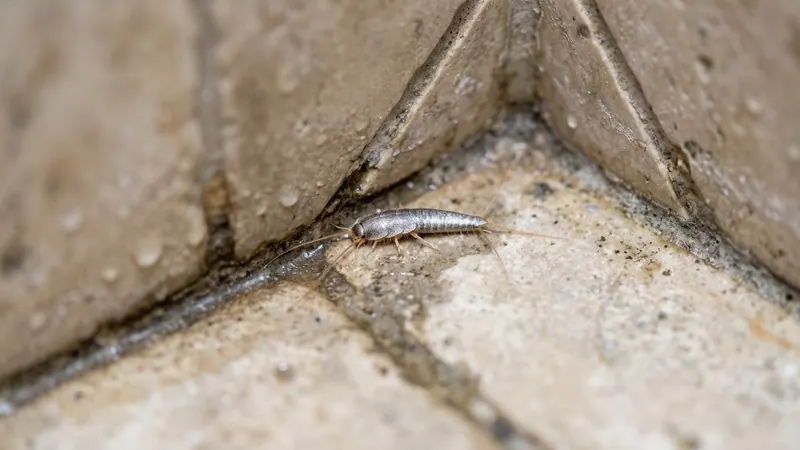
Switch on the bathroom light at night and something thin and silver runs for the gap beside the basin. It has a tapering body, long antennae and three tail-like bristles, and it moves with a wriggle that gives the silverfish its name. The urge is to stamp on it. A better question is why your bathroom suits it so well.
Why moisture is the real story
The University of California’s silverfish guide describes them as shiny, silver or pearl grey and about 1/2 inch (roughly 1.3 cm) long. They are nocturnal and hide by day, and silverfish favour damp, warm places such as laundry rooms. Firebrats, their close cousins, prefer hot, dry spots around ovens and furnaces. In a bathroom the likelier visitor is the damp-loving one.
Several sources of moisture often work together: steam after showers, a slow leak at the waste or tap connections, weak ventilation, and wet towels or mats left on the floor. When these meet, even a clean bathroom becomes comfortable for silverfish.
Week one: investigate, change nothing yet
Spend the first week looking.
- Dry the pipework beneath the basin and toilet with a paper tissue, then check whether it is damp again later.
- Notice how long the mirror stays misted after a shower and whether the window or fan clears it.
- Inspect the sealant and tile joints for darkening, lifting or soft spots.
- Feel the base of cabinets and skirting for damp patches.
- Check whether the area around the plughole stays wet.
Make a note of each finding. If there is an actual leak, call a plumber first. Pest measures cannot solve a leak, and it will keep supplying the damp.
Week two: drying habits
In the second week the focus moves to routines. Treat the bathroom as a room that has to dry out after use.
- Leave the door or window open, or run the extractor, after a shower.
- Hang towels and mats to dry elsewhere.
- Wipe the screen and floor with a squeegee or dry cloth.
- Open the vanity unit door slightly so air can circulate.
- Remove damp sponges and cloths.
The Californian guide points to ventilation fans and dehumidifiers in enclosed spaces, as these can bring humidity down to a level silverfish find unlivable. It also advises keeping bathrooms, shower stalls and laundry areas clean and dry and repairing plumbing leaks. A bathroom without a window needs the fan to run for longer than the shower does.
Week three: remove food and hiding places
Silverfish eat dry foods such as cereals, flour and pasta, as well as glued paper, book bindings and starched fabrics. In a bathroom, the sources are fewer, but there are some: cardboard packaging, paper rolls stored in the open, dust and shed insect skins. So:
- Move cardboard boxes and loose paper out of the bathroom.
- Wipe dust from skirting and the tops of cabinets.
- Seal gaps around pipes and cable entries, which both cut off hiding places and moisture paths.
- Empty and wipe the vanity unit shelves now and then.
Remember, though, that they can last several months with no food. That is why drying the room and closing cracks matters more than any one clean-up.
Do they really go?
A simple trap tells you. The guide suggests cockroach sticky traps, or a glass jar with tape wrapped around the outside so the insects can climb in and cannot get out. Put them in corners and along edges, and check weekly. Count what you catch and write the number down. If it falls over three weeks, the damp work is succeeding; if it stays level, the moisture source is somewhere you have not found yet.
What the damage looks like
Silverfish scrape surfaces. On paper, expect irregular, scalloped holes and sometimes stained patches. Wallpaper and book covers near glue are the typical victims. The bathroom has little to offer, so look at the places that do: boxes of documents, photograph albums and old books in damp stores, wardrobes on outside walls and shelves in a shut-up flat.
Silverfish or something else?
A small bug in the bathroom is not always a silverfish. A cockroach is much larger and heavier, and a tiny dark insect that hops between tiles might be a springtail or a fly near a drain. Silverfish run and wriggle but do not jump. A close photograph by torchlight will help. If you suspect cockroaches, our guide to cockroach species helps with identification.
Sea air and closed flats
Along the coast, summer humidity can stay high, and a flat that is closed for long periods without air conditioning cannot shed the moisture in its bathrooms and utility rooms. When you open a holiday home for the season, a quick check under the basin and around the shower is one of the best investments you can make before any insects appear; the first-day steps are in our guide to opening a villa. In winter, cold outer walls may show condensation, which keeps the foot of the wall damp. In both cases the answer is the same: let air move and dry wet surfaces.
Calling a plumber
If a tissue is damp every time you test the pipework, the basin trap drips, paint blisters or the grout is constantly wet, repairing the fault comes first. Anything else you do will be temporary until it is fixed. Tenants should send the landlord a dated photograph of the leak.
Beyond the bathroom
Silverfish also turn up in utility rooms, under kitchen sinks, basements, stores and closed holiday homes. Boxes of books and papers and old newspapers give them both food and shelter. For closed properties, the closing-up checklist lists these areas. Fabric damage in a wardrobe may come from moths rather than silverfish, which our clothes moth article helps you sort out.
Mistakes that keep the problem alive
- Cleaning on the day you see one and forgetting the damp.
- Storing damp towels in a closed cupboard.
- Running the fan with the window shut, when no replacement air can enter.
- Putting off a small leak.
- Keeping paper and cardboard open in the vanity unit.
If the numbers do not fall after the damp is under control, the moisture may be feeding from inside a wall or beneath the floor. Our silverfish page explains the service we offer for cases like that.