
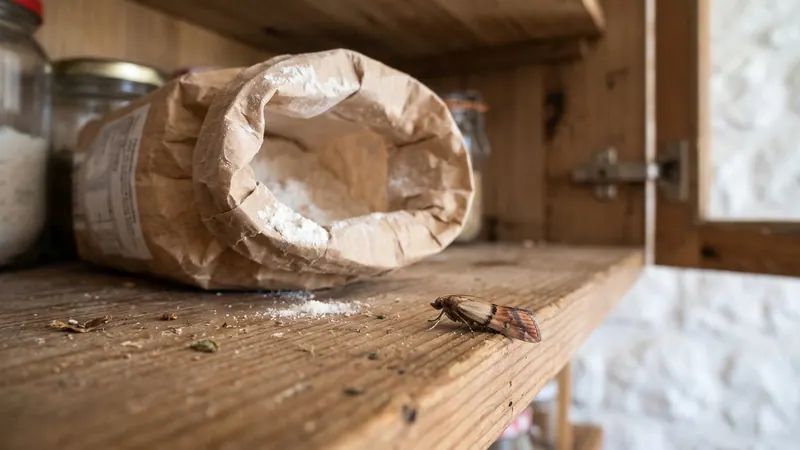
You open the cupboard and find the flour has formed little lumps held together by fine silk. In the evening, small moths flutter round the kitchen light. That combination almost always means pantry moths, sometimes called Indian meal moths. The good news is that the solution is practical and cheap. The bad news is that it needs a thorough afternoon, and half measures do not work.
How they get into a clean kitchen
The University of California’s pantry pests guide says pantry pests usually enter your home in an infested package of food. So the culprit is often a bag from the shop, not a lack of cleanliness. A few eggs are enough: once the package is open, the larvae develop, adults emerge and spread to neighbouring products.
Mature larvae can also wander a long way from the food, the guide notes, so you may find them or their silk elsewhere in the house, climbing a wall or sheltering on the ceiling.
What the evidence looks like
Look for:
- webbing in the folds and corners of packets,
- tiny holes in food containers,
- clumped flour or grain with silk running through it,
- larvae and droppings among the product,
- adult moths in the evening, often near a light.
The same pests can be in anything on the shelf: semolina, rice, bulgur, pasta, nuts, dried fruit, biscuits, chocolate, pet food and birdseed. Check them all, because a moth does not stay with one product.
The pantry audit
Plan on a couple of hours, then repeat every few months.
Take everything out
Lay all packets on a table. Sort open ones from sealed ones. Look at seams and corners in good light.
Remove what is infested
Throw away any food that shows evidence of infestation. For a package found in the kitchen, the guide says the best thing is to seal it up and take it out of the house at once. Do not leave it in the kitchen bin.
Clean the shelves
Wash shelves with soap and water, scrubbing corners and crevices, or vacuum them with a crevice attachment to take out eggs and pupae. Let them dry before refilling.
Store properly
Put dry goods in containers with tight-fitting lids. Do not mix old and new lots in one container, as the guide says. Wash the container before refilling it.
Check again
For a few weeks, look at the shelves every few days. The guide describes pheromone traps for monitoring: put them where there was an infestation, check them weekly and expect most to stay effective for about three months. A trap shows that moths are present but does not clear them, so use it to measure progress.
Freezing
The guide lists freezing seldom-used flours, grains and spices as a way to stop infestations from developing. This article gives no times or temperatures, so check the source for details. Freezing will not rescue food that already shows signs of infestation; throw such food away.
The kitchen environment
Pantry pests do better in damp conditions, so keep food storage areas dry and check for leaks under the sink or condensation inside cupboards. The same idea underlies our piece on silverfish in the bathroom. Look also in nearby spots such as the space behind the cupboard and cracks in worktops.
Which foods are most at risk?
Flour, semolina, rice, pasta, nuts, dried fruit, biscuits, chocolate, pet food and birdseed are favourites. Buying in bulk or keeping things for a long time raises the risk. Smaller quantities that you use quickly mean a faster turnover and less time for moths to establish themselves.
Look for the source, not just the moths
Catching moths one by one is satisfying but does not solve anything, because the adult is only one stage of the life cycle. The numbers lie in larvae and eggs hidden in packets and shelf corners. The morning after you see moths, go back to the shelves and ask which packet they came from. Adults gather near lights and windows, but they were born in the cupboard. Pay particular attention to boxes that nobody has touched for a long time.
Shopping habits
- Avoid broken or damaged packages; the guide says they are more likely to become infested.
- Pick products with a good turnover, not ones that have sat on the shelf for months.
- Buy bulk only if you have storage containers.
- When you get home, decant straight into your own containers, looking at the contents as you do so.
- Treat pet food and birdseed with the same care.
Making the afternoon routine
For most kitchens, the audit takes two to three hours: an hour to empty and inspect, an hour to clean and dry, half an hour to refill. Put “pantry day” in the diary every three months. Writing the purchase date on each container is an easy way to avoid mixing old and new.
Mistakes that bring them back
- Leaving an opened packet in its original bag.
- Topping up an old jar with new flour.
- Killing the moths but not looking for the source.
- Cleaning the shelf but not the containers.
- Checking one shelf and skipping the corner cupboards.
- Forgetting pet food and birdseed.
A year of pantry care
In early summer, before the heat, empty and wipe all shelves. After the summer holidays, check the nuts and dried fruit that were bought in bulk. Autumn is the time to resist adding new stock onto old. At the end of winter, use up or discard what has sat untouched. Four reviews a year cover most of the risk. In a holiday home, include the food cupboards in the shutdown, as in the closing-up checklist.
Not to be confused with the clothes-eating kind: moths in the wardrobe and moths in the larder are different insects, as our comparison shows, and the kitchen routine fits well alongside this audit. If the moths persist after a thorough clear-out, they may be coming from a neighbouring flat or a hidden spillage, which our moth page describes the service for.