
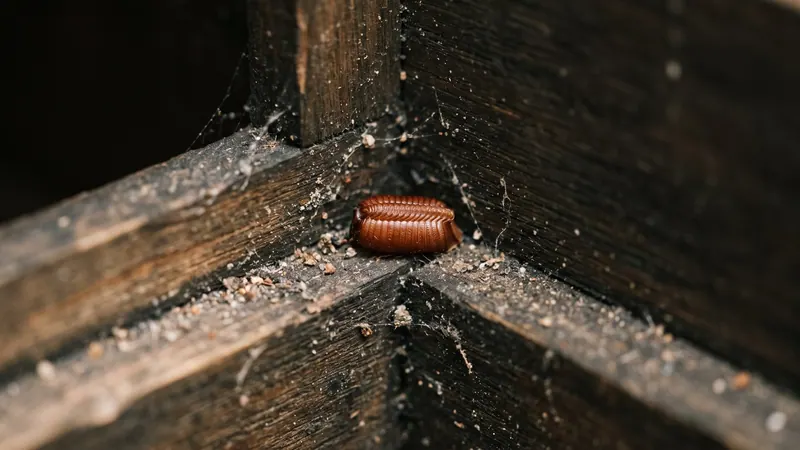
Behind the cooker, inside a cupboard hinge, under the edge of a cardboard box: a small brown capsule that feels hard when you tap it. If it has a faint ridge along one edge, it is very likely a cockroach egg case. Because a single case can hold a dozen or more young, it deserves more attention than one stray adult would.
A package, not a pile of eggs
An egg case, or ootheca, is a protective shell that holds a double row of eggs. It shields them from drying out and from damage. That is why even a casual glance can tell you something: a case is a sign that adult females were comfortable enough here to reproduce.
Four species, four habits
The University of California’s cockroach guide describes how each common species handles its cases. The sizes below are converted from inches and are approximate.
| Species | Case colour | Length | What the female does |
|---|---|---|---|
| German | Light beige | About 6 mm | Carries it for most of the roughly 30-day incubation, then drops it a day or two before hatching |
| Brownbanded | Light brown | About 6 mm | Glues it to ceilings, under furniture or in dark spots |
| Oriental | Dark red-brown | About 9 to 10 mm | Deposits it in debris or food in sheltered places |
| American | Brown, turning black within a day or two | About 9 to 10 mm | Carries it for about six days, then cements it to a protected surface |
The same guide says a German case holds about 30 young and an American case about 12, and that American eggs incubate for about two months or longer. These are species averages, not predictions for the capsule in your hand.
What a carried case means
Because a German female keeps her case attached until shortly before the young emerge, you may never see a case lying around. The sign is the female herself, with a small beige bulge at her rear. Seeing one tells you there are probably other adults and nymphs nearby. A single carrying female at night is a stronger warning than it looks.
Where cases are found
Cockroaches favour dark, warm, sheltered places. The guide lists crevices near electrical appliances, behind wall decorations, in the legs of furniture and in clutter for brownbanded roaches, and cool, damp places such as garages, basements, meter boxes and drains for Oriental ones. Typical finds include:
- the gap behind the fridge and cooker,
- the inside corners and hinge areas of kitchen cupboards,
- the space under the sink, around pipes and any leaking joints,
- stacks of cardboard, newspapers and delivery boxes,
- the back of bathroom cabinets and utility-room shelves.
Shine a torch on these spots after dark, because almost all cockroaches are nocturnal. Dark spots or smears are their droppings, and the guide notes that sticky traps are the best way to detect and monitor a population: place them where floors meet walls and check them daily for several days to see where most are caught.
Is it really an egg case?
Not every capsule is. Lookalikes include:
- Seeds and husks. Sesame, pepper and herb seeds sometimes lodge in cupboard corners. Seeds crush or split, while a case stays firm.
- Rodent droppings. These are longer, often pointed at one end and may contain hair.
- Shed skins. A moulted skin is light and empty, and keeps the outline of the insect.
- Dried paint or glue. It feels flat and solid and has no ridge.
If you are unsure, photograph the object beside a coin and write down the date. A second find in the same area, or an adult roach, makes the photograph useful.
You have found one: a calm sequence
There is no need to panic, but treat the case as an alert.
- Put on gloves and lift it with a tissue.
- Seal it in a bag and put it in an outdoor bin with a lid.
- Wipe the area with a damp cloth and remove crumbs and grease.
- Return in the evening with a torch to see if anything is moving.
- Store food in lidded containers and clear away stacks of cardboard.
This does not solve an infestation; it makes you a careful observer. The everyday habits in our kitchen prevention routine fit well with this, and a business can adapt the weekly checks in the guesthouse checklist.
What one case says about the whole colony
The number of cases and where they sit give a rough indication of how established the problem is. A single case under a cardboard box could be an incidental delivery. Several cases in different parts of the kitchen suggest a settled population. Cases glued to ceilings or in furniture legs suggest brownbanded cockroaches, which do not stay in the kitchen the way German cockroaches do. If you also see insects of different sizes, small nymphs together with adults, you are looking at a family rather than a visitor.
To work out which species you have, compare the adults with the pictures in our cockroach species guide, as one case alone is poor evidence.
Myths worth dropping
- “Stamp on it and it is over.” The case is tough, and stamping spreads the mess. Bag and bin it.
- “One case means one cockroach.” It means a dozen or more could be on the way.
- “Clean homes never get them.” Cleanliness helps, but damp pipes, delivery boxes and shared walls bring cockroaches into spotless kitchens.
- “Only the kitchen matters.” Bathrooms, utility rooms and storage areas count too.
What if you find nothing?
The absence of cases does not prove the absence of cockroaches. Pointers include insects scattering when you switch on a light at night, black specks like ground pepper in corners, a musty smell in closed cupboards and signs of cockroaches by day. Record them over a week, noting the room and time, and use sticky traps to confirm what the torch suggests.
Flats and shared walls
In a block, cockroaches travel along pipes, cable ducts and the voids between flats. A case near a pipe entry may mean the source is inside the building structure. Ask neighbours and the building manager whether they have seen them, and write down the position of what you found. If the same pattern repeats, a whole-building approach is more effective than treating one kitchen. When the signs spread beyond one room or you keep finding cases after a week of careful observation, our cockroach page describes the service we offer.